
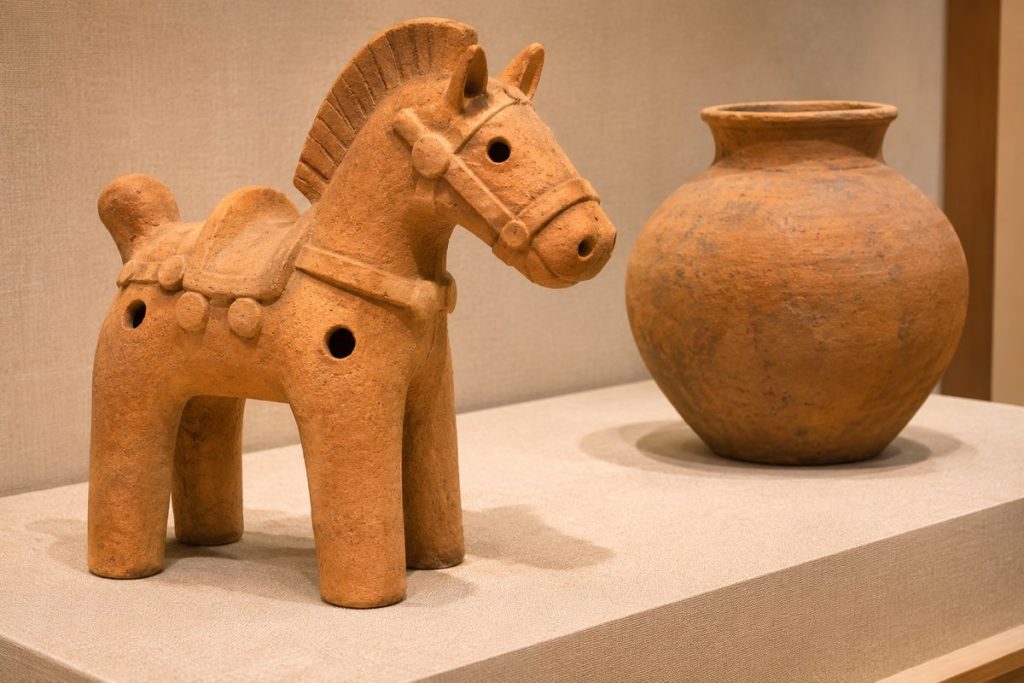
新田荘歴史資料館で学ぶ古代の歴史を題材にした生成イメージです。実際の収蔵品や展示室の写真・複製ではなく、埴輪と土器は創作上の表現です。
長楽寺や世良田東照宮の近くで、新田荘を中心とした地域の歩みを学べます。古墳や埴輪、寺院に伝わる文化財、近世の暮らしを示す品を時代順に見ながら、周辺の史跡を歩く前の手掛かりを得られる施設です。
基本情報
| 所在地 | 群馬県太田市世良田町3113-9 |
|---|---|
| 開館 | 9:30~17:00、入館16:30まで |
| 入館料 | 一般200円、20名以上160円、中学生以下無料 |
| 休館 | 月曜、月曜が休日の場合は翌日、12月29日~1月3日 |
| 交通 | 世良田駅徒歩20分、深谷駅から車約20分 |
Near Chorakuji Temple and Serada Toshogu Shrine, this museum explains the history of the Nitta estate and surrounding communities. Archaeological objects, temple treasures and evidence of Edo-period life provide context before exploring the nearby historic sites.
At a glance
| Location | 3113-9 Serada-cho, Ota, Gunma |
|---|---|
| Hours | 9:30–17:00, entry until 16:30 |
| Admission | ¥200; groups of twenty or more ¥160; junior-high pupils and younger free |
| Closed | Mondays, the following day when Monday is a holiday, and December 29–January 3 |
| Access | Twenty minutes on foot from Serada Station; about twenty minutes by car from Fukaya Station |
STAY NEAR YOUR DESTINATION
この周辺の宿泊施設
同じ地域の宿泊施設をご紹介します。
古墳と埴輪から始まる地域の歩み
常設展示は原始・古代、中世、近世、近現代の四つの時代を扱います。市域には旧石器時代の石器や縄文の土器、数多くの古墳と埴輪の生産遺跡が残り、展示ではこうした資料から地域の成り立ちを紹介します。利根川流域で暮らした人々の道具や墓の形に目を向けると、後の武士の歴史だけでは分からない太田の姿が見えてきます。建物の周囲に史跡がまとまる世良田で、時代の順序を整理する入口になります。
新田氏と寺院の文化財
新田荘遺跡は11か所の遺跡で構成される国指定史跡です。平安時代末期に源義国・義重父子が開発を進めた地域を基盤に、新田氏が勢力を伸ばしました。館では隣接する長楽寺や東照宮の文化財を含め、その歴史と文化を紹介します。中世の文書や絵画に加え、近世の展示には養蚕の守り神として信仰された猫絵など、土地の産業や信仰につながる資料もあります。武将の系譜と人々の暮らしを併せて見る構成です。
2026年秋の木暮理太郎展
2026年9月15日~11月29日は郷土出身の登山家・研究者を扱う「木暮理太郎展」です。1873年に現在の寺井町で生まれた木暮は、日本山岳会の第3代会長を務め、『山の憶ひ出』を残しました。登山だけでなく歴史研究や詩歌にも取り組んだ人物で、企画では写真、山岳展望図、書籍、記念碑の拓本などを紹介します。地域で育った人物を通し、近代の登山文化と郷土研究のつながりを知る機会になります。
見学時間と歴史公園への到着
開館は9時30分~17時、入館16時30分まで。一般200円、20名以上の団体160円、中学生以下無料です。対象の障害者手帳を持つ人と介護者1名も無料。月曜休館で、月曜が休日なら翌日が休館となり、12月29日~1月3日も休みます。東武世良田駅から徒歩20分、JR深谷駅から車約20分。周辺の寺社を回る場合は、資料館の見学時間と各寺社の拝観を分けて組み立てられます。
太田市で組み合わせる施設
太田市の見学・食事・宿泊や駐車を組み合わせる際には、次の施設も選べます。
Starting with archaeology
Permanent displays cover prehistory and antiquity, medieval history, the early modern period and modern times. Ota preserves Palaeolithic stone tools, Jomon pottery, numerous burial mounds and evidence of haniwa production. Objects associated with everyday life and burial practices introduce a history broader than the later warrior clans. In Serada, where several historic sites stand close together, the museum provides a chronological starting point.
The Nitta family and temple heritage
The nationally designated Nitta-no-Sho Historic Sites comprise eleven locations. The estate grew from development associated with Minamoto no Yoshikuni and his son Yoshishige in the late Heian period. Displays introduce the Nitta family and cultural property linked to neighbouring Chorakuji and Toshogu. Alongside medieval documents and paintings, early modern material includes cat pictures associated with protecting silkworms, connecting local industry and belief with the history of ruling families.
An autumn exhibition on Kogure Ritaro
The Kogure Ritaro exhibition runs September 15–November 29, 2026. Born in present-day Terai-cho in 1873, Kogure became the third president of the Japanese Alpine Club and wrote Yama no Omoide. His interests extended to history and poetry. Photographs, mountain panoramas, books and rubbings of commemorative monuments explore connections between modern mountaineering and local historical research through a figure with roots in Ota.
Planning a visit to Serada
Open 9:30–17:00, entry until 16:30. Admission is ¥200, or ¥160 for groups of twenty or more; junior-high pupils and younger are free. Eligible disability-certificate holders and one caregiver are also exempt. Closed Mondays, the following day after a Monday holiday, and December 29–January 3. Serada Station is twenty minutes away on foot, or Fukaya Station around twenty minutes by car. Allow separate time for neighbouring temples and shrines.
Related places in Ota City
Consider these places when combining sightseeing, meals, accommodation or parking in Ota City.