
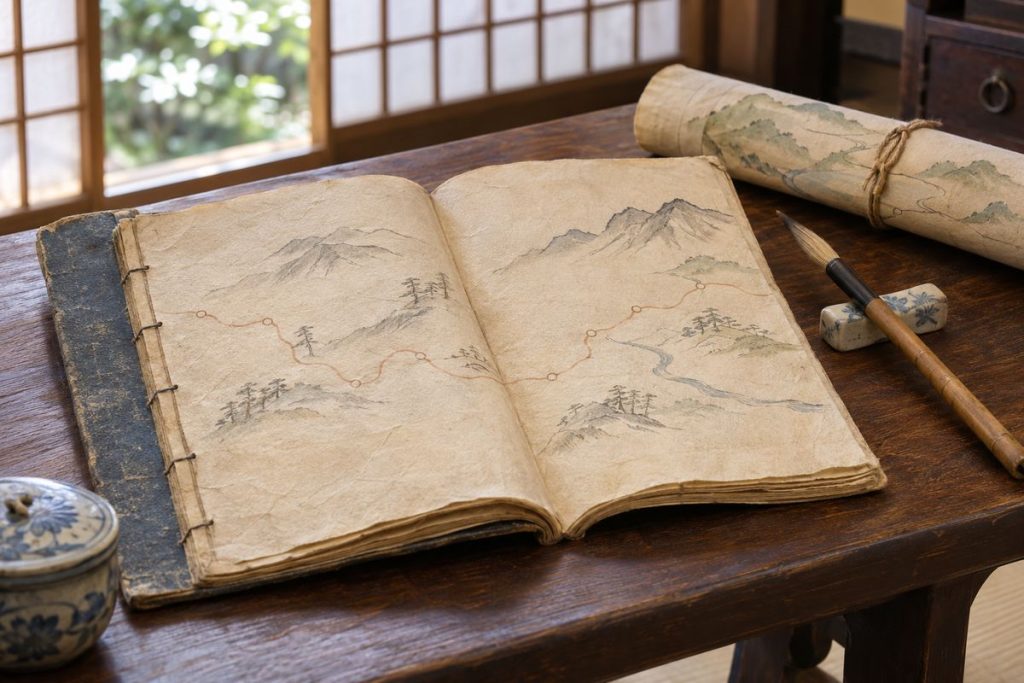
高山彦九郎記念館で学ぶ江戸時代の旅を題材にした生成イメージです。日記・地図・室内は創作上の表現で、実際の収蔵資料や館内を撮影・複製したものではありません。
江戸時代に各地を旅した高山彦九郎の足跡を、故郷の細谷でたどる記念館です。政治思想だけでなく、旅先で出会った人々や土地の暮らしを記録した日記に目を向けると、18世紀後半の社会が身近になります。
基本情報
| 所在地 | 群馬県太田市細谷町1324-7 |
|---|---|
| 開館 | 9:30~17:00、入館16:30まで |
| 入館料 | 100円、20名以上80円、中学生以下無料 |
| 休館 | 月曜、月曜が休日の場合は翌日、12月29日~1月3日 |
| 交通 | 細谷駅徒歩10分、太田駅からタクシー約10分。駐車場あり |
In his home district of Hosoya, this museum follows the journeys of Edo-period thinker Takayama Hikokuro. Beyond his political ideas, the diaries recording people and everyday conditions encountered on the road offer a close view of late eighteenth-century society.
At a glance
| Location | 1324-7 Hosoya-cho, Ota, Gunma |
|---|---|
| Hours | 9:30–17:00, entry until 16:30 |
| Admission | ¥100; groups of twenty or more ¥80; junior-high pupils and younger free |
| Closed | Mondays, the following day when Monday is a holiday, and December 29–January 3 |
| Access | Ten minutes on foot from Hosoya Station; about ten minutes by taxi from Ota Station; parking available |
STAY NEAR YOUR DESTINATION
この周辺の宿泊施設
同じ地域の宿泊施設をご紹介します。
細谷に生まれた旅の思想家
高山彦九郎は1747年に現在の太田市細谷町で生まれた、江戸時代中頃の思想家です。京都、江戸、郷里を拠点に旅を重ね、公家や武士、学者、商人、農民など幅広い階層の人々と交流しました。記念館は生誕地に隣接し、1996年5月3日に開館。彦九郎の旅と足跡を主題として、書簡、日記、旅道具、映像や影絵などから人物と時代を紹介します。生家跡と記念館を近い距離で巡れる立地です。
日記に残る土地の暮らし
27歳から晩年まで残した膨大な日記には、北海道と四国を除くほぼ全国への旅が記されています。内容は訪問先の地理や昔話だけでなく、災害、物価の上昇、飢饉、社会の動き、人々との交流に及びます。彦九郎は知識人と各地の人々をつなぐ情報の媒介者でもありました。書簡や旅の記録を通して見ると、後世の政治的な人物像だけに限らず、行き先で見聞きしたことを丹念に書き留めた観察者としての一面に触れられます。
2階で見る太田の原始・古代
2階企画展示室では「太田市の原始・古代の展示」を開催しています。旧藪塚歴史民俗資料館の展示資料のほか、これまで公開の機会が少なかった考古資料も紹介する内容です。彦九郎の生きた江戸時代を学ぶ常設展示と、市域のさらに古い時代を扱う展示を一館で見ることができます。人物の旅を軸にした記念館でありながら、藪塚を含む太田の地域史にも視野を広げられる構成。屋外の史跡を歩く際の基礎知識にもつながります。
駅から歩く見学と料金
開館9時30分~17時、入館は16時30分まで。100円、20名以上の団体は1人80円で、中学生以下は無料です。対象の障害者手帳を持つ人と介護者1名にも無料扱いがあります。月曜が休日の場合は翌日休館、年末年始は12月29日~1月3日です。細谷駅南側の出口から徒歩約10分で、駅前の案内図を使い南へ進めます。太田駅からタクシー約10分、敷地近くに見学用駐車場があります。
太田市で組み合わせる施設
太田市の見学・食事・宿泊や駐車を組み合わせる際には、次の施設も選べます。
A travelling thinker from Hosoya
Born in present-day Hosoya-cho in 1747, Takayama Hikokuro travelled from bases in Kyoto, Edo and his home district. His contacts ranged from court nobles, warriors and scholars to merchants and farmers. Opened beside his birthplace on May 3, 1996, the museum uses letters, diaries, travel equipment, film and shadow imagery to explore his journeys and era. The adjacent historic home site adds a geographical connection to the displays.
Everyday life recorded in diaries
Diaries kept from his late twenties until the end of his life document journeys across most of Japan, excluding Hokkaido and Shikoku. They record local geography and stories alongside disasters, rising prices, famine, social conditions and personal encounters. Takayama also carried information between intellectual circles and regional communities. His correspondence and travel records reveal an attentive observer as well as the political figure remembered by later generations.
Archaeology on the upper floor
The second-floor temporary gallery currently hosts an exhibition on Ota's prehistory and antiquity. It includes objects from the former Yabuzuka History and Folklore Museum and archaeological material less often displayed. Visitors can therefore combine the permanent introduction to Takayama's Edo-period world with evidence of much earlier local life. The two themes broaden the visit from one person's journeys to the history of the wider municipality, including Yabuzuka.
Walking from the station and admission
Open 9:30–17:00, entry until 16:30. Admission is ¥100, or ¥80 per person for groups of twenty or more; junior-high pupils and younger are free. Eligible disability-certificate holders and one caregiver are exempt. Closed Mondays, the next day after a Monday holiday, and December 29–January 3. From Hosoya Station's south-side exit, follow the station map south for about ten minutes. Ota Station is around ten minutes by taxi, and visitor parking is available nearby.
Related places in Ota City
Consider these places when combining sightseeing, meals, accommodation or parking in Ota City.