
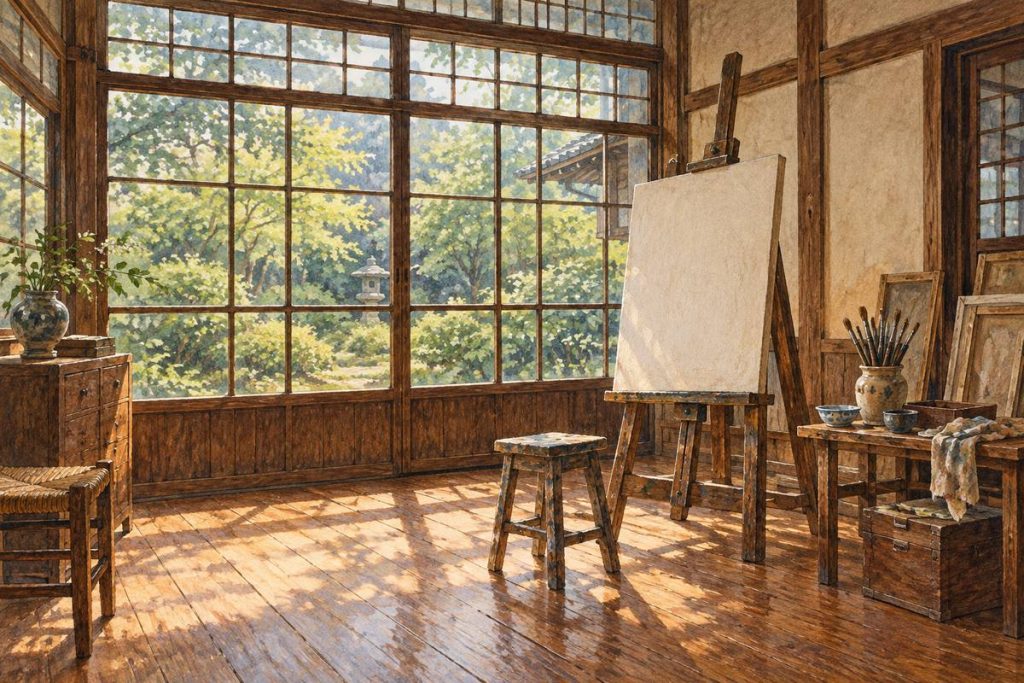
画像は画室見学を表現した生成イメージで、実際の記念館や中村彝作品の写真ではありません。
中村彝アトリエ記念館は、大正期の洋画家・中村彝が1916年に下落合に建てたアトリエを、建築当初の姿に復元して公開する新宿区立施設です。当時の部材を生かした室内と関連展示を見学できます。入館無料で、絵画の実作品展示はありません。
基本情報
| 所在地 | 東京都新宿区下落合3-5-7 |
|---|---|
| 開館時間 | 10:00~16:30(入館は16:00まで) |
| 休館日 | 月曜日(祝休日の場合は翌平日)、12月29日~1月3日 |
| 入館料 | 無料 |
| 展示の特徴 | 復元アトリエ、生涯と画業のパネル・高精細写真。実作品展示なし |
| アクセス | JR山手線目白駅から徒歩約10分 |
| 駐車条件 | 車での来館不可。公共交通機関を利用 |
| 電話 | 03-5906-5671 |
Nakamura Tsune Atelier Memorial Hall presents the painter’s Shimoochiai studio, restored to its 1916 appearance using many original building materials. Visitors can explore the studio and related displays at this Shinjuku municipal facility. Admission is free; original paintings are not exhibited.
At a glance
| Location | 3-5-7 Shimoochiai, Shinjuku Ward, Tokyo |
|---|---|
| Opening hours | 10:00–16:30; last admission 16:00 |
| Closed | Mondays, or the following weekday if Monday is a public holiday; Dec 29–Jan 3 |
| Admission | Free |
| Display focus | Restored atelier, panels and high-resolution photographs about his life and work; no original paintings |
| Access | About 10 min on foot from Mejiro Station on the JR Yamanote Line |
| Car visits | Car visits are not permitted; use public transport |
| Telephone | 03-5906-5671 |
STAY NEAR YOUR DESTINATION
この周辺の宿泊施設
同じ地域の宿泊施設をご紹介します。
画家の創作を支えた下落合の画室
中村彝は1887年に現在の水戸市に生まれ、療養を続けながら絵画制作に取り組んだ洋画家です。1916年にこの地にアトリエ付き住宅を新築し、1924年に亡くなるまで創作を続けました。代表作「エロシェンコ氏の像」などを描いた場所として、新宿と近代美術のつながりを知ることができます。
彝の死後、アトリエは画友たちの保存活動や洋画家・鈴木誠の所有を経て受け継がれました。現在の記念館は、後年に増改築された建物を1916年当初の姿へ戻して整備したものです。
当時の部材を生かした復元と展示
天井や床などには建築当時の部材が多く使われています。見学では、画家が制作した空間そのものと、その空間を保存してきた過程に注目できます。現存部分と復元整備された部分がある建物として見てください。
彝の生涯、画業、代表作はパネルや高精細写真で紹介されます。区の案内は実作品の展示がないと明記しています。特定の原画が必ず見られる施設として予定を立てず、原画鑑賞を希望する場合は所蔵館の最新展示情報を確認しましょう。
入館無料、16時までに受付へ
開館は10:00~16:30ですが、入館は16:00までです。閉館時刻だけを目安にせず、見学時間を取れるように到着しましょう。月曜休館で、月曜が祝休日の場合は翌平日が休館になります。
ボランティアによる解説は、2月・8月を除く土日祝の開館日10:00~16:00に行う案内があります。詳しい日程や団体での解説希望は新宿歴史博物館へ確認してください。通常見学と解説の実施条件は別です。
目白駅からのアクセスと車での来館
JR山手線目白駅から徒歩約10分です。周辺の林芙美子記念館や佐伯祐三アトリエ記念館と合わせて歩く場合も、施設ごとに所在地・時間が違います。同じ「アトリエ記念館」でも中落合の佐伯館と取り違えないようにしましょう。
運営者は車での来館はできないと案内しています。公共交通機関を利用し、館内への移動や介助などで確認が必要な場合は、記念館へ事前に相談してください。
The Shimoochiai studio where Tsune worked
Born in what is now Mito in 1887, Nakamura Tsune pursued painting while living with illness. He built his home and studio here in 1916 and continued working until his death in 1924. The site associated with works such as Portrait of Vasilii Eroshenko offers a connection between Shinjuku and modern Japanese art.
After Tsune’s death, fellow artists helped preserve the studio, which later belonged to painter Suzuki Makoto. The memorial hall restores the building, altered in later years, to its original 1916 form.
Restoration using historic materials
Many original components survive in features such as the ceiling and floor. The space invites attention both to the artist’s working environment and to the effort to preserve it. The building combines surviving material with restoration.
Panels and high-resolution photographs introduce Tsune’s life, work and major paintings. The ward explicitly states that original artworks are not displayed. If you want to see an original painting, check the current exhibition information at the museum that holds it.
Free admission with entry by 16:00
The hall opens 10:00–16:30, with last admission at 16:00. Arrive before the entry deadline and allow time to look around. Monday closures move to the following weekday when Monday is a public holiday.
Volunteer commentary is listed 10:00–16:00 on open weekends and public holidays, except in February and August. Check dates or group commentary requests with Shinjuku Historical Museum. Commentary has separate arrangements from an ordinary visit.
Walking from Mejiro and car restrictions
The hall is about ten minutes on foot from Mejiro Station on the JR Yamanote Line. Check the location and hours of each site if combining it with Hayashi Fumiko Memorial Hall or Saeki Yuzo Atelier Memorial Hall. Saeki’s atelier is a different destination in Nakaochiai.
The operator says car visits are not permitted. Use public transport and contact the hall in advance about access or assistance needs.
周辺の地図
同じ地域の旅の案内
平和祈念展示資料館|新宿住友ビル33階、三つの戦争体験を学ぶ無料施設
新宿住友ビル33階で、兵士・戦後強制抑留者・海外からの引揚者の体験を資料や映像で伝える資料館。無料入館、休館日と都庁前駅からの行き方を案内します。
案内を読む↗
早稲田大学国際文学館|村上春樹ライブラリーの無料見学と一般入館条件
早稲田キャンパス4号館の文学施設。階段本棚やギャラリー、20名以下予約不要の一般見学、21名以上の団体予約と研究書庫の別条件を紹介します。
案内を読む↗
佐伯祐三アトリエ記念館|落合の創作拠点、無料見学と季節別の開館時間
佐伯祐三が日本で創作拠点としたアトリエを保存・公開。実作品展示との違い、10月からの16時閉館、無料見学と下落合駅からのアクセスを案内します。
案内を読む↗
リーガロイヤルホテル東京|早稲田の滞在・高田馬場駅から無料シャトル
東西線早稲田駅3a出口から徒歩約7分。通常15時チェックイン、11時チェックアウト。高田馬場駅からの無料シャトルと、5時~翌1時の駐車場を案内。
案内を読む↗
ヒルトン東京|西新宿駅から地下通路・宿泊者向け駐車場
西新宿駅C8出口から徒歩約2分。通常15時チェックインと11時チェックアウト、宿泊者向け地下駐車場、館内施設と確認日現在の工事案内を紹介。
案内を読む↗
戸山公園|箱根山44.6mと大久保の広場、2地区のアクセスと工事案内
箱根山地区と大久保地区に分かれる都立公園。標高44.6mの築山、広場、エリア別の最寄り駅と駐車場がない点、園地整備工事の確認先を案内します。
案内を読む↗