
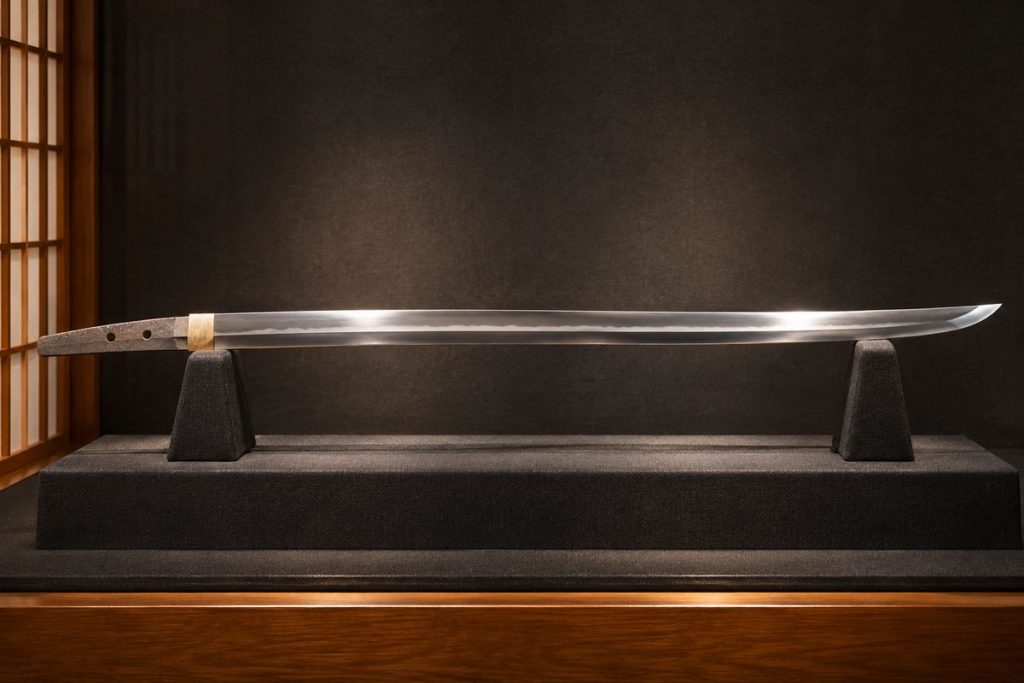
大隅俊平美術館での刀剣鑑賞を題材にした生成イメージです。大隅俊平の実作品や館内展示を撮影・複製したものではなく、刀身や展示方法は実物と異なります。
由良町の住宅地に、庭園と刀鍛冶の仕事場を残す美術館があります。刀身だけでなく、材料の玉鋼、手作りの道具、作業映像を順に見ることで、一本の刀が仕上がるまでの工程と刀匠の暮らしに近づけます。
基本情報
| 所在地 | 群馬県太田市由良町3051 |
|---|---|
| 開館 | 9:30~17:00、入館16:30まで。作刀映像の上映は16:00まで |
| 入館料 | 300円、20名以上240円、中学生以下無料 |
| 休館 | 月曜、祝日の場合は翌日、12月29日~1月3日、展示替え期間 |
| 交通 | 細谷駅徒歩約15分、駐車場17台 |
In a residential part of Yura-cho, this museum preserves a garden and sword-making workshop. Swords, tamahagane steel, handmade tools and filmed work explain how a blade takes shape, while the former home gives a sense of the maker's everyday surroundings.
At a glance
| Location | 3051 Yura-cho, Ota, Gunma |
|---|---|
| Hours | 9:30–17:00, entry until 16:30; sword-making film shown until 16:00 |
| Admission | ¥300; groups of twenty or more ¥240; junior-high pupils and younger free |
| Closed | Mondays, the following day when Monday is a holiday, December 29–January 3, and exhibition changeovers |
| Access | About fifteen minutes on foot from Hosoya Station; seventeen parking spaces |
STAY NEAR YOUR DESTINATION
この周辺の宿泊施設
位置を確認できた掲載宿泊施設から、近い順に最大4件。施設または番地を基にした直線距離の目安です。
位置情報:地理院地図(国土地理院)・各施設案内を基に当サイトで距離を算出。 Supported by Rakuten Developers
直刃に向き合った刀匠の旧宅
大隅俊平は1932年に太田で生まれ、宮入昭平に学んだ後、1960年に独立して故郷へ戻った刀匠です。刀剣界の正宗賞を3度受賞し、1997年に重要無形文化財「日本刀」の保持者となりました。1960年代後半以降に追求した直刃の作風が特徴です。1979年築の住居を増改築した展示棟は靴を脱いで上がる造りで、自身が手入れした庭の笠松も見どころ。11~3月には雪吊りの姿を見られます。
玉鋼と道具から製作の流れを知る
展示室1には年譜やゆかりの品、約40kgの玉鋼があります。展示室2は大隅と弟子たちが手作りした道具や、各製作工程の実物を紹介する部屋です。この二つの部屋は撮影可能ですが、刀剣を並べる展示室3は撮影禁止です。仕事場は当時の姿を保存し、通常はガラス戸越しに見学します。学習室の作刀映像は約30分で、上映終了は16時。最終入館時刻より早いため、映像も見るなら余裕を持って到着できます。
2026年秋からの大太刀展
2026年9月19日~2027年1月24日は「大太刀」展を開催し、大太刀6口をまとめて展示します。刃長4尺6寸の作品も2年ぶりに登場する企画です。通常の刀剣展示も年3回入れ替わり、同じ刀匠の作品を時期ごとに異なる組み合わせで鑑賞できます。工房内に入る催しや作刀実演は行事日の実施で、普段の工房見学とは異なります。
開館時間と駅からの移動
開館は9時30分~17時、入館は16時30分まで。月曜が祝日なら翌日が休館で、年末年始は12月29日~1月3日、別途展示替え休館があります。入館300円、20名以上の団体240円、中学生以下無料です。対象の障害者手帳を持つ人と介護者1名も無料で、ミライロIDを利用できます。東武細谷駅から徒歩約15分、太田駅からタクシー約10分。駐車場は17台で、住宅地の道から庭園側の入口へ向かいます。
太田市で組み合わせる施設
太田市の見学・食事・宿泊や駐車を組み合わせる際には、次の施設も選べます。
A home devoted to suguha temper lines
Born in Ota in 1932, Oosumi studied under Miyairi Shohei before returning home as an independent swordsmith in 1960. He won the Masamune Prize three times and became a Living National Treasure for Japanese sword making in 1997. From the late 1960s he concentrated on straight suguha temper lines. Visitors remove their shoes in the adapted 1979 residence. The garden he tended includes an umbrella-shaped pine, supported by winter ropes November–March.
Following the process from steel to sword
Room One contains a chronology, personal objects and roughly forty kilograms of tamahagane steel. Room Two presents handmade tools and physical examples of successive production stages. Photography is permitted in these two rooms, but prohibited in the sword gallery, Room Three. The preserved workshop is normally viewed through glass doors. A sword-making film lasts about thirty minutes; screening ends at 16:00, earlier than final admission.
The 2026–27 Odachi exhibition
The Odachi exhibition runs September 19, 2026–January 24, 2027, bringing six large swords together, including a blade measuring four shaku six sun, shown again after two years. Sword displays normally change three times yearly. Events allowing entry into the workshop and live demonstrations take place on designated dates rather than as part of an ordinary visit.
Admission and getting there
Open 9:30–17:00, with entry until 16:30. Closures are Mondays, the next day after a Monday holiday, December 29–January 3 and changeover periods. Admission is ¥300, or ¥240 for groups of twenty or more; junior-high pupils and younger enter free. Holders of eligible disability certificates and one caregiver are exempt, with Mirairo ID accepted. Hosoya Station is about fifteen minutes away on foot; Ota Station is around ten minutes by taxi. Seventeen parking spaces are provided.
Related places in Ota City
Consider these places when combining sightseeing, meals, accommodation or parking in Ota City.