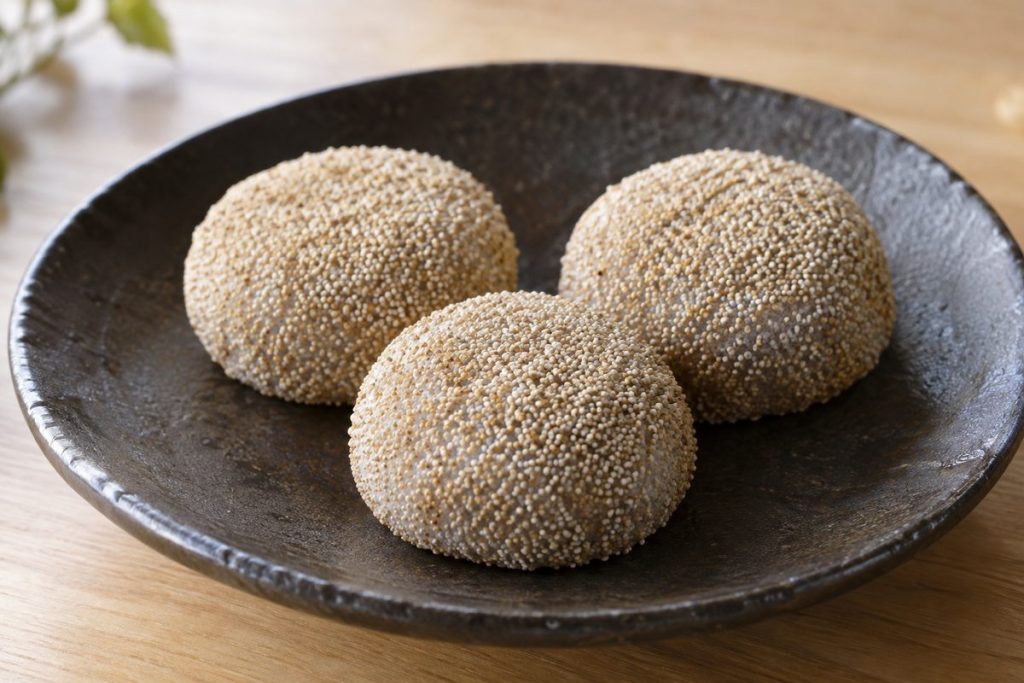
堺のけし餅のイメージ(生成画像)
宿院の小島屋は、堺の茶の湯の文化とも結び付くけし餅をつくる老舗です。香ばしいけし実の表面と、柔らかな餅、なめらかなこし餡を組み合わせた小さな菓子を、持ち帰りや2階茶房で楽しめます。買い物だけの日と喫茶を使う日では営業時間が異なります。
基本情報
| 本店 | 8:30~18:00 |
|---|---|
| 茶房 | 12:00~17:00、火水土・隔週日曜 |
| 品例 | 抹茶セット750円、けし餅紙函6個1329円 |
| 保存 | 製造日から4日、常温15~24℃・冷蔵を避ける |
こし餡、餅皮、けしの実の組み合わせ
けし餅は小豆のこし餡を餅皮で包み、外側にけしの実をまぶした菓子です。北海道産の小豆、国産の餅粉、トルコ産けし実などを使います。表面の細かな粒の食感と香り、餅の柔らかさ、餡の甘さを少量ずつ味わえます。小島屋は延宝年間創業と伝え、堺で受け継がれた製法を守っています。菓子をきっかけに、港町に伝わった産物や茶の湯と和菓子のつながりへ関心を広げられます。店先での購入と喫茶での一服を組み合わせやすい一軒です。
抹茶セットと持ち帰りの箱
2階の茶房ではけし餅のほか、コーヒー、ロールケーキ、ぜんざいなどを用意し、抹茶セットは750円です。窓から阪堺電車を眺めながら一服できます。持ち帰りのけし餅は紙函6個1329円、8個1739円、10個2160円、木箱12個2830円などがあり、箱商品の価格は税込です。人数や贈る相手に合わせて個数を選べます。喫茶のセットと持ち帰り商品は内容が違うので、店内で食べたい分と土産にする分を分けて選ぶと無理がありません。
本店の時間と茶房の営業日を分ける
本店の販売は8時30分~18時。2階茶房は2025年6月から営業日が変わり、12~17時、火・水・土と隔週の日曜です。朝から本店が開いていても、茶房も同時に使えるわけではありません。土産を買う予定なら本店の時間、抹茶と一緒に座って食べる予定なら茶房の曜日と時間を基準にします。宿院周辺の散歩と組み合わせる場合は、昼の開店に合わせて喫茶を入れると動きやすくなります。日曜は毎週営業ではない点も行程に入れます。
製造日から4日の保存と宿院への交通
けし餅の消費期限は購入日ではなく製造日から4日で、餅が柔らかな製造後2~3日が食べ頃です。常温15~24℃で保存し、冷蔵庫は餅皮が硬くなるため避けます。冬も寒い場所へ置かないようにします。長い旅の最終日に買うなど、持ち歩きと食べる日を合わせて選びます。所在地は堺区宿院町東1丁1-23。阪堺線宿院電停から徒歩約1分、南海本線堺駅から約7分で、市街の散策に加えやすい立地です。
堺市で合わせて訪れる施設
港町の市街地と歴史ある社寺、郊外の展示施設や公園を、食事・宿泊・駐車場の利用時間に合わせて組み合わせられます。
Kojimaya in Shukuin makes keshimochi, a small sweet associated with Sakai’s tea culture. Poppy seeds coat soft rice dough around smooth red-bean paste. Buy a box to take away or use the upstairs tea room, noting that retail and cafe visits have different opening schedules.
At a glance
| Main shop | 08:30–18:00 |
|---|---|
| Tea room | 12:00–17:00; Tue/Wed/Sat and alternate Sundays |
| Examples | Matcha set ¥750; six keshimochi in paper box ¥1,329 |
| Storage | Four days from manufacture; 15–24°C; avoid refrigeration |
Smooth bean paste, rice dough and poppy seeds
Keshimochi wraps smooth azuki paste in rice dough, with poppy seeds covering the outside. Ingredients include Hokkaido azuki, Japanese rice flour and Turkish poppy seeds. The fine seeds provide texture and aroma alongside the soft dough and sweet filling. Kojimaya traces its foundation to the Enpo era and preserves a method handed down in Sakai. The sweet offers a way into the port town’s history of exchanged ingredients and tea culture. A retail visit can be combined with a tea break when the upstairs room is operating.
Matcha sets and boxes to take away
The upstairs tea room offers keshimochi, coffee, roll cake and zenzai; the matcha set is ¥750. Tram views add interest to a pause at the window. Takeaway boxes include six sweets in paper packaging for ¥1,329, eight for ¥1,739 or ten for ¥2,160, and twelve in a wooden box for ¥2,830, with box prices including tax. Choose the quantity for the party or recipient. Tea-room sets and retail boxes have different contents, so plan separately for what to eat during the visit and what to take home.
Separate schedules for the shop and tea room
The main retail shop opens 08:30–18:00. Since June 2025, the second-floor tea room operates 12:00–17:00 on Tuesdays, Wednesdays, Saturdays and alternate Sundays. An open shop in the morning does not mean cafe seating is available. Use retail hours for souvenir shopping, or the tea room’s days and afternoon hours for a sit-down matcha break. A Shukuin walk can fit around its noon opening. Sunday service is alternating rather than weekly, so the cafe schedule needs a separate place in the day’s plan.
Four-day shelf life and getting to Shukuin
The use-by period is four days from manufacture, not purchase; the dough is at its softest around days two to three. Store at 15–24°C and avoid refrigeration, which hardens it. Avoid cold storage spots in winter too. Align purchase and travel with the intended eating day, for example shopping towards the end of a trip. At 1-1-23 Shukuinchohigashi, Sakai-ku, the shop is about one minute from Shukuin tram stop or seven from Sakai Station, fitting easily into a central-city walk.
More places for a Sakai visit
Combine the port town’s central streets and historic shrines with suburban museums or parks, allowing for meal, hotel and parking hours.