
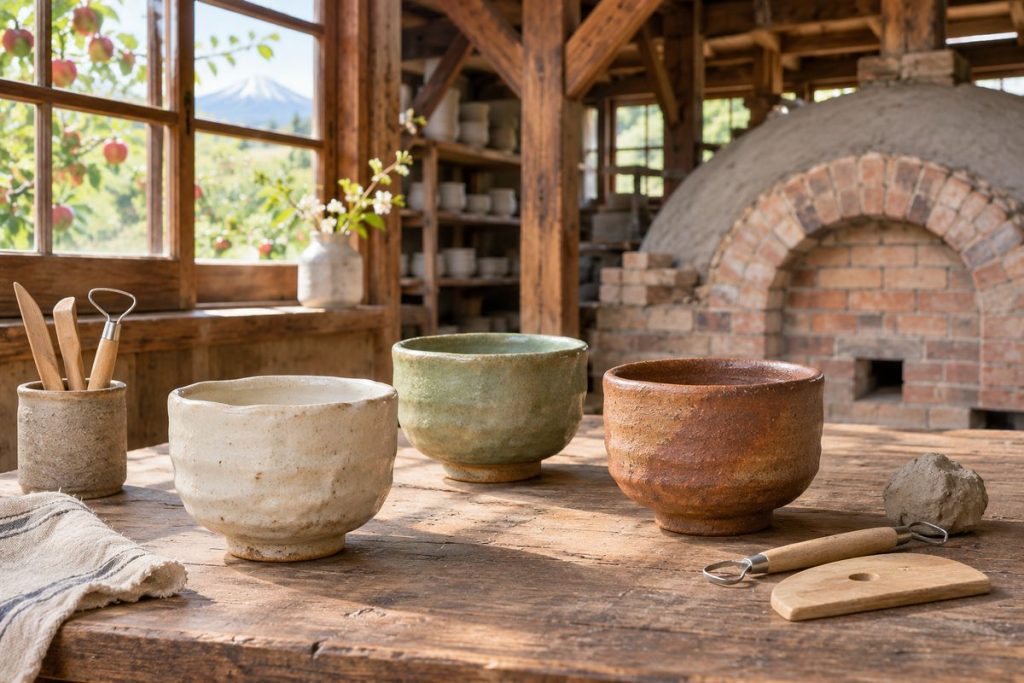
鳴海要記念陶房館で学ぶ陶芸文化を題材にした生成イメージです。器は創作の一般的な形で、鳴海要の実作品・展示・工房を撮影・正確に再現したものではありません。
鳴海要記念陶房館は、りんごの木の灰から生まれる釉薬と、その器を生んだ仕事場に触れられる施設です。賀田で制作した鳴海要の陶房と窯を保存し、ギャラリーや喫茶も備えます。岩木地区を巡る途中に、作品を見る時間と器を使う休憩を一緒に取れます。
基本情報
| 開館・休み | 9~16時、火曜は祝日の場合翌日、12/29~1/3休館 |
|---|---|
| 展示室 | 一般大学300円、小中高250円 |
| 飲物・菓子付き | 一般大学700円、小中高650円 |
| 交通 | 賀田東口下車すぐ、ICから車約35分 |
Narumi Kaname Memorial Pottery Studio connects apple-ash glaze with the workshop where its vessels were made. The preserved studio and kiln in Yoshita are joined by galleries and a café. An outing around the Iwaki district can combine looking at ceramics with a break using the artist’s vessels.
At a glance
| Hours / closure | 09:00–16:00; Tuesdays shifted after holidays; December 29–January 3 closed |
|---|---|
| Exhibition | Adults/university ¥300; primary–high-school pupils ¥250 |
| Drink-and-sweets package | Adults/university ¥700; schoolchildren ¥650 |
| Access | Beside Yoshita-Higashiguchi stop; about thirty-five minutes from the IC |
STAY NEAR YOUR DESTINATION
この周辺の宿泊施設
同じ地域の宿泊施設をご紹介します。
りんごの木の灰から生まれる色
鳴海要は旧岩木町の賀田に生まれ、加藤土師萌に学んだ陶芸家です。帰郷後に開発した「りんご釉」は、年を重ねたりんごの太い幹を燃やした灰を原料にします。焼成条件によって緑や桃色などを生む釉薬で、地域の果樹と器がつながります。常設展示では鳴海要と師・加藤土師萌の作品を見ることができます。
一九六五年の窯と制作の仕事場
工房棟には1965年に築いた倒炎式単独窯「津軽窯」が残っています。陶房では制作の場やろくろに目を向けられ、入口の陶板表札、日本間の赤絵を使った襖の引き手にも作家の手仕事が表れます。完成した器だけを見るのではなく、どのような場所で作品を生み出したのかを、展示棟と工房棟を合わせてたどれます。
展示料金と作家の茶器を使うセット
展示室は一般・大学生300円、小中高校生250円で、10人以上の団体は250円・200円です。鳴海要の茶器を使うコーヒーまたはお茶と菓子を付けるセットは、一般大学700円・小中高650円、団体650円・600円。65歳以上の弘前市民や市内小中学生などは入館無料制度があります。ホール・喫茶だけの利用では展示室の入館料はかかりません。
四時閉館と賀田のバス停
開館9~16時、火曜は祝日の場合翌日、12月29日~1月3日と展示替え等は休館です。所在地は賀田字大浦1-2、弘前バスターミナル3番から賀田東口下車すぐ、大鰐弘前ICから車約35分です。市街の美術館より早い閉館に合わせて訪問順を選べます。
弘前市で合わせて訪れる施設
駅周辺と城下町の散策、岩木山麓・高岡の森への移動を組み合わせ、食事や入浴の時刻に合わせて訪問順を選べます。
Colours created from apple-tree ash
Born in Yoshita in the former Iwaki town, Kaname Narumi studied under Hajime Kato. After returning home he developed ringo-yu, a glaze using ash from mature apple-tree trunks. Firing conditions produce colours including greens and pinks, connecting local orchards with ceramics. Permanent displays include works by Narumi and his teacher Kato.
The 1965 kiln and the preserved workshop
The workshop building retains the Tsugaru kiln, a single downdraught kiln built in 1965. The studio preserves the setting of Narumi’s work and his pottery wheel. A ceramic nameplate and red-enamel sliding-door pulls in the Japanese room show his craft in smaller details. Combining the gallery and workshop gives a sense of the place where the finished vessels originated.
Exhibition fees and a drink in the artist’s ceramics
Exhibition admission is ¥300 for adults/university students or ¥250 for school pupils, reduced to ¥250/¥200 for groups of ten or more. A package with coffee or tea served in Narumi ceramics and sweets costs ¥700/¥650, or ¥650/¥600 for qualifying groups. Admission exemptions include Hirosaki residents aged sixty-five or over and local primary/junior-high pupils. Hall/café-only visits do not require the exhibition admission fee.
A 16:00 finish and the Yoshita bus stop
Open 09:00–16:00, closing Tuesdays shifted after holidays, December 29–January 3 and for some changeovers. The address is 1-2 Oura, Yoshita, beside Yoshita-Higashiguchi stop on services from Hirosaki Bus Terminal stand three, or around thirty-five minutes by car from Owani-Hirosaki IC.
More places for a Hirosaki itinerary
Combine the station area and castle-town walks with trips to Mount Iwaki’s foothills and Takaoka-no-Mori, arranging the order around meals and bathing sessions.